Friday, 4 October 2019

The Middle Levels

The Middle Levels
Sunday 4th August 
To reach the Middle Levels from Denver requires a brief excursion onto the tidal Great Ouse and a transit back through the lock that brought us onto the river on which we had spent the last few weeks.
We donned our life jackets and joined the queue of four boats waiting before us. The levels are reached by passing through Salters Lode Lock and the passage is usually undertaken a short time after high tide so the flow helps the crossing.
We finally got through the lock, lifting us upto the level of the tide and commenced the short trip across, after a 100 yards or so I started to make the left turn, the tide now carrying us sideways as we approached the lock. This manoeuvre is required because the approach to the lock lies at an angle of about 60 degrees to the line of the river meaning one has to almost double back to make the approach, I had been instructed by the lock keeper to make sure that I approach broadside so that if I miss the turn the boat would be carried into the lock landing (protected by lots of tyres thankfully). Fortunately I managed to get into the right position and managed to enter the lock unscathed.
I was expecting us to be raised up in the lock but as the levels are lower than the tide we actually dropped a few feet before making our exit, during the lowering of the water we purchased a key required for water points and services in the levels.
The Middle levels are operated by the Middle Level Commissioners whose responsibility is to maintain water levels in the system, unlike the river Cam, no license is required and passage is free, the lock keeper does however register your boat onto the system. We had also been told that the locks here require a special windlass as the normal CRT one does not fit the 2 locks on the system, unfortunately the lock keeper had sold out.
Looking back at Salters Lode Lock
Leaving the lock we set off on what rapidly became a very shallow and narrow channel, known as Well Creek. It came as a shock having been on much wider and deeper waters over the last few weeks, progress was quite slow but we plodded on passing over the main drain on Mullicourt Aqueduct.
Crossing the Main Drain on
Mullicourt Aqueduct
The main drain is not navigable as it is used to control excess water in the system, as the level increases, water is pumped out at low tide near Kings Lynn. It has to be remembered that the main drain lies almost twenty feet below sea level so control of the water in this part of the fens is vitally important. Salters Lode protects the levels from the tides at one end whilst Stanground Lock protects it from the non tidal river Nene at the other.
Cruising the Well Creek across the Fens
Outwell Church
The Well Creek leads to the villages of Upwell and Outwell, we found good moorings at the latter, near the church, these are well maintained by volunteers and make for a welcoming and pretty place to stop. Water is also available here too, on inspection I discovered that our newly purchased key was of no use here and a notice informs that the key has to be borrowed from the village butchers or pub. We spent a couple of nights here and the fishing was also good with a few good roach and bream landed.
Upwell Church
On a pleasant Monday's morning we decided to have a walk around  the two villages, they merge so well together that it is difficult to separate one from the other. Navigation through the villages requires care as there is a very tight bend and a few very low bridges that require me to crouch right down to get under.
One of many low bridges, this one is on
 the approach to Upwell
Another low bridge at Outwell
The villages are typical of the Fens, very quiet, and peaceful each with its own charming church. Until the 1960s the villages were linked to Wisbech by a tramway with its own unique tramcars, these were essentially steam engines but dressed up in such a way that they resembled an old style guards van, they had the wheels covered and cow catchers at each end. This was done for safety as the line ran alongside roads and through the centre of villages. The tramcars were used as the model for Toby the Tram engine by the Rev W Awdry in his railway stories. The line carried coal into the villages and returned with potatoes. There is very little evidence of  tramway left these days but further information can be found at https://www.lner.info/co/GER/wisbech/wisbech.php
The narrow navigation through Outwell
Moving on we set off, in lovely early August sunshine, we continued along the very narrow creek passing under yet more very low bridges before arriving at Marmont Priory lock. We had been informed that it was necessary to call the lock keeper prior to approaching the lock, having done this she informed me that she was away at a hospital appointment and would not be back for a couple of hours, we crawled along taking our time to reach the lock and tied up to await here return. An hour or so passed with no sign of her so I went to investigate the lock, sure enough our windlasses would not fit so we had no choice but to sit and wait. Eventually a hire day boat arrived at the lock, the crew were unsure what to do and I enquired as to whether they had a windlass, they had not been shown where the windlass was stored, I took a guess and asked them to look under the steps down into the boat, fortunately there was one of the special windlasses along with a pair of mooring pins.
We took the opportunity of getting through the lock with their help, something that was of mutual benefit as we were able to show them what to do.
We reached the confluence with New Pophams Eau, from this point we were now on the old river Nene, so called because the main Nene flows out to sea through Wisbech via the tidal sluice and lock at the Dog and Doublet near Peterborough. The wind was getting up I was grateful for the wider and deeper waters to push along into the stiff breeze.
The trip to March from here took us through a flat arable landscape most of which lay below the level of the river, the course of which followed long straight sections.
March beckons with the river flowing in a deep channel as the town is built on higher ground, cruising past a long line of moored boats we arrived at the moorings just before the town bridge, grateful that there was available space. Tying up we then set off to explore the town, another typical fenland town, famous for its market, regrettably we hadn't arrived on market day so carried on looking around.
March Town Bridge
March Town Hall at dusk

 The town boasts a church claiming to have the best carved interior in the country. The town hall looks like it would be more at home in a Bavarian town with its tall, slender clock tower. The rest of the town is a collection of the typical shops with a large Boyes department store to the edge of town. There is also a large Sainsburys close to the riverside.
Great Pub
We called in at the Ship Inn, situated at the top of the steps leading up from the moorings, we found it a very friendly pub and spent a great night chatting to the locals. We learned that the town was once an important railway centre being at the junction of the Great Eastern and Great Northern railways, they built a marshalling yard at Whitemoor close to the centre, in the 1920s and 30s it was the second largest in Europe and the largest in Britain. It was eventually phased out in the 1960s with much of the site being used for the building of HM Prison Whitemoor.
The locals also mentioned that the pub did a great breakfast on Wednesdays through to Sunday, we decided that we should test their recommendation  the following day and found it to be the best we have had in ages, a similar price to Wetherspoons but much better quality.
Breakfast at The Ship

We had planned to stay another evening but having called the keeper at Stanground Lock (needs to be booked at least 24 hours in advance) we learned that the resident keeper was in hospital and that the keeper from Salters Lode was standing in. His availability was limited by the tides at Salters Lode and he informed us that he would only be available on the Thursday lunchtime. This meant we would have to leave March earlier than planned so we could get closer to the lock at Whittlesey.
Following our feast in the Ship we got underway, calling into March marina, the home of Fox Narrowboats hire fleet. Filling up with fuel, and purchasing the special windlass (£18 for the one remaining lock), we continued on our way along a wide river crossing a vast expanse of fenland, the wind was getting up and with very little shelter it made progress quite tricky in places.
We passed up through Ashline  Lock, using our expensive windlass, before arriving at the good, if a little short, moorings adjacent to the recreation field, thankfully they were empty. The fishing was really good here and I managed to land some good sized Roach.
The Old Nene

Thursday morning arrived and we set off for the lock at Stanground that would take us off the Middle Levels. Firstly, however, we had to negotiate  the notoriously sharp bend in the village. This requires careful navigation because the bend is narrow, as it passes beneath a bridge. Following a few loud blasts on the horn I gradually brought the bow towards the bank across the bend then reversed bringing the stern round fortunately the gentle breeze helped and we glided round, increasing power as we pulled away.
A video of the manoeuvre can be seen here  https://youtu.be/c3DGqzDd9Zo

We soon caught sight of Peterborough Cathedral in the distance and to our left the land rose up with the fields heavily quarried for the nearby extensive brickworks.
There is an archaeological site close by here and the remains of iron age settlements have been discovered, there is now a visitor centre at Must Farm.
 https://peterborougharchaeology.org/peterborough-archaeological-sites/must-farm/.
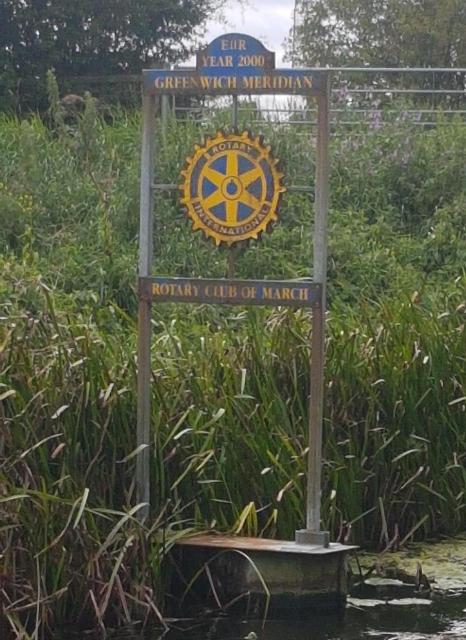
Crossing the Greenwich Meridian
A couple of miles further on brought us to the lock and we were lifted up onto the main river Nene at Peterborough, this marked the end of our time in the Levels, certainly an area we would like to explore further.
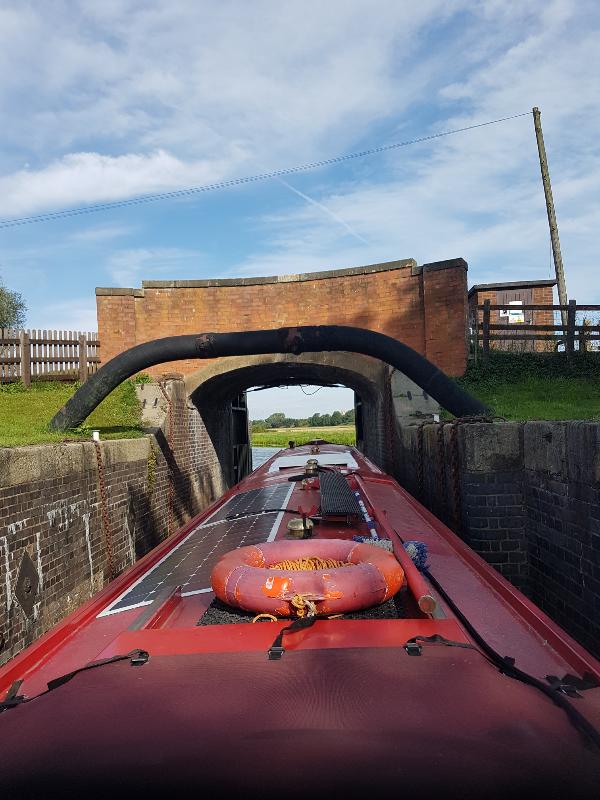
Leaving Stanground Lock

The cruising on the Levels can, in places, become slightly tedious due to the long straight lengths with very little to see, but they do have a character all of their own and our overall our experience was good.


Looking back to the Middle Levels

Tuesday, 24 September 2019

The River Great Ouse - Part 3 - To Bedford and Back


Sunday 14th July

On a fine Sunday morning we decided to move on, heading down the Old West river towards St Ives. This was the day of the cricket world cup final and we had the radio on, listening to the game unfold as we approached our destination. The Old West river is believed to be the original route of the Great Ouse but hereabouts it is very narrow and more like a canal.
The first part of our journey upstream was not too bad and we passed by Streatham old engine, this is an old pumping engine used to pump water from the surrounding fens into the river, the pump was unusual in that it took the form of a scoop rather like water wheel in reverse. The engine is no longer used and is now a museum with steaming days held on the last Sunday of each month, unfortunately for us our timings were such that we were not in the right place at the right time and sadly never saw the engine running. The engine was installed in 1831 it consisted of a double-acting Boulton and Watt steam engine, the scoop was 11 and a quarter meters diameter, rotating at 4 RPM, lifting approximately 30 tons of water per Revolution. Diesel pumps were added in 1925 however the steam engine continue to operate until 1941. Just beyond Streatham we arrived at the marina close to the Lazy Otter Pub passing under the old A10 Bridge I found it difficult to work out which way our route went, the river here was narrow with a larger turning going off to the marina making for difficult route finding, round another very sharp bend and a very shallow section of the river we passed under the new new A10 bridge from here the river continues to make it twisted journey across the fens with higher ground over to the west. Eventually we arrived at Hermitage lock were the Old West becomes reunited with the main course of the Great Ouse. The lock is just downstream of Earith and marks the upstream end of the tidal New Bedford river. Passing through the lock we entered the short tidal section of river taking us to Brownshill Staunch this is a lock taking us back on to non tidal Waters. The tidal section flows is very close to the town of Earith but alas there is nowhere to moor to explore the town. We were looking out for seals at this section as they are often seen, having made their way from the Wash. To our disappointment we didn't see any on this occasion. Passing through the lock at Brownshill, we found ourselves on a wide deep section of river passing through some charming countryside and villages. A several miles further on we arrived at St Ives lock. Passing through, we took an immediate turn to the left to enter Jones Boatyard and St. Ives Marina. I had ordered a new solar panel and the boatyard had kindly agreed to take delivery of it for me. As it was late in the afternoon we decided to tie up in the marina overnight. We put on the TV to watch the concluding overs of the cricket world cup final and and the now well documented very thrilling finish resulting in an England victory. Monday morning arrived and I went over to the Marina Office where I found my panel and ancillary parts duly delivered. We spent the rest of the morning installing the panel however I realised I was a couple of connectors short so could not connect the panel. Later that day we moved into St Ives having ordered the missing items for next-day delivery to the marina.St Ives is a lovely little town with a pretty waterfront and a couple of streets behind, a charming high street running in parallel with the riverfront.The town is linked to its larger neighbour, Cambridge, by a high speed guided bus link, we passed beneath this on our way up the river and I was amazed just how fast they travel!
We moored in the Waits, a small channel off the river that required careful navigation past other moored boats before we got into the one remaining space.
The Waits moorings in St Ives

We tried to moor on the waterfront but it has a very high wall with stone projections making tying up difficult. There are other moorings available on the opposite side of the river,close to the Dolphin Hotel, however on this occasion they were full.
The Quayside St Ives

The river is crossed by and old road bridge, some of the earlier structure still remains, retaining the pointed arch design, whilst part of it was rebuilt in the 17th century, these arches have to more common rounded design.
The town bridge St Ives
The riverfront St Ives


 The bridge also boasts a chapel half way across, one of only three left in the country, both the others being in Yorkshire, one at Rotherham and the other, the eldest, at Wakefield, we visited this and recorded our visit in an earlier blog.St Ives celebrates the fact that Oliver Cromwell lived their for five years (1631-1636), by a large statue of him in the market square.
Cromwell statue St Ives
Some of the history of the town can be explored in the Norris Museum close to the Waits moorings. Among the many local and traditional shops is J Wadsworths  off license, boasting the largest array of single malt whiskeys in East Anglia, we took a look inside and they also have an impressive stock of wines and other spirits too. The other locally famous shop is Toms Cakes, a true cake emporium with a large range of delicious confectionaries to choose from. We stayed here for a couple of days and Ian’s mum came out from Cambridge to visit us, we spent an enjoyable day exploring the town with her. Whilst moored here I also took the opportunity to complete the installation of the solar panel having collected the “missing” connectors, from the boatyard.It was time to move on as the moorings here are limited to 48 hours, so on a fine and sunny Wednesday morning (great for testing the new panel) we reversed out of the moorings back into the main river channel. Continuing our journey upstream we headed off towards St Neots where we had agreed to meet my sister and brother in law along with grandson Henry.The above St Ives is very pretty, it is wide and deep and makes for easy cruising around large river meadows, the fenland scenery now replaced by a more traditional riverscape. Entering a wooded section we arrived at Hemingford Lock nestled amongst the trees in a picturesque location.
Hemingford Lock

Passing through we quickly arrived at the very pretty riverside at Hemingford Grey, we made a note to stop at the extensive moorings here on our way back downstream. We continued in lovely, July sunshine passing through a busy Houghton lock before entering a long, lock free section through Huntingdon.
Approaching Brampton Mill and lock, Huntingdon

Boaters used to canals need to be aware that facilities are less common on the river but most of the marinas we encountered were very accommodating and charged very little, if anything, for use of their facilities. We called into the enormous Hartford marina just below Huntingdon, they seemed to have all sorts of berths ranging from the many river cruisers, wide beams and narrowboats, to large floating holiday chalets and homes.The river skirts the edge of Huntingdon with riverside gardens and parks, before passing beneath the extremely busy A14 bridge, a little further on they were busy building yet another large bridge taking this busy highway away from the town.Beyond the bridge the river takes a narrow channel to the right leading down to Godmanchester lock. We had to wait here for a couple of boats to pass through in front of us, whilst waiting, a chap who was stood watching us, came over for a chat, he said he had seen us on the boat in Skipton and taken a photograph of the boat moored there, he found it hard to believe he was looking at the same boat so far away and took a
Offord Lock nr St Neots

nother picture for his records.

Several more locks and some lovely scenery through wooded countryside brought us to St Neots, unfortunately we were running late mainly due to the slow operation of the guillotine locks and the fact that we had to queue at each one. Carole Jim and Henry had to get back so we only managed a brief fifteen minutes with them.St Neots has plenty of moorings, some alongside a recreation ground and others on a floating pontoon on the opposite side of the river.
Moored at St Neots


We moored by the park and stopped over for a couple of nights. We had a walk round this charming little town again it feels influenced by Cambridge but still retains its charm, the large market square was holding its weekly market whilst we were there and there were a few traditional stores as well as the usual tat found these days.Moving on we set off further upstream heading for Great Barford a few hours away, heavy rain was forecast and it began just as we were tying up. The rain continued for most of the evening but it didn't stop a few brave souls from entering the river to do some wild swimming, something that seems very popular around here.

Great Barford bridge - this marks the navigation for many taller cruisers

The following morning brought much improved weather as we set of to the end of the navigable section at Bedford. A mile or two from Great Barford we passed the intriguingly named Danish Camp, its name probably taken from the fact that there was a large inland port here during the viking invasion. The site was very busy with cyclists and walkers making use of the popular cafe. The site sits on the cycle way linking Bedford to Cambridge along an old railway line. We passed by as there was no mooring space available. 
Feeling Peckish

Above here the river enters a very picturesque stretch, surrounded by steep wooded banks, on one of the bends we passed a few moored boats sat below some very pretty wooden cabins sat in idyllic locations amongst the trees. Beyond here the river widens and becomes much straighter, making it popular with canoeists and kayakers enjoying the July sunshine. We called into Priory Marina to use their facilities and the strong wind made mooring here quite difficult. We called into the office to chat with the lady on duty, she was extremely helpful with a lot of good advice regarding our next couple of miles in Bedford. We set off on our last few miles soon arriving at town lock close to the centre of Bedford, the lock is situated at 90 deg to the river and sits in a large area of parkland. Leaving the lock we made the sharp left turn to head up through the towns riverside, being good weather and a Saturday the town was very busy. We passed under the main road bridge to reach the visitor moorings just beyond, the moorings were just beyond the town and didn’t appeal to us, plus a large tree had fallen nearby partially blocking the channel by the moorings. We called the Environment Agency to report the tree but it took nearly half an hour painfully trying to explain the problem and its location to the girl at the other end of the line. She insisted on me giving a postcode even though I had stated that it was on the only visitor moorings in the town. Giving up on mooring in the town we turned round to make our way back downstream, we had spotted a GOBA mooring on the way in and headed for that, it was clear on our way into the town but on our return we found two narrowboats moored there, fortunately we managed to squeeze in behind them.The moorings are dominated by a huge pyramid shaped building that we later discovered to be a very popular aquadome. Just behind this is a useful Tesco store. 
Pyramid swimming pool Bedford

Moving on, we made our way downstream passing a very busy Danish Camp, as it was a Sunday morning there were people partaking in just about every watersport possible and we had to pick our way carefully through them all. 
Wild swimming

We arrived at St Neots to find all the moorings taken and were discussing where to moor downstream when we noticed a boat pulling away from the floating pontoon, we hurriedly turned around and grabbed the spot. 
Hemingford Grey

The weather was becoming very hot as we made our way the following morning, up to Hemingford Grey, we found space on the 48 hour moorings beside the parkland just above the village. It was a scorching afternoon as we tied up and spent an enjoyable summers evening bbq on the riverbank in the company of Julie and Steve Levitt who came across to join us. 
Studying the map with Steve

Julie and Steve live in Titchmarsh which is on the river Nene, I hadn’t realised just how close the rivers came to each other, at this point only 20 miles. It was great to meet them on our journey and we arranged another meet up when we get closer to them on the Nene.
Post BBQ evening at Hemingford Grey


The following day was too warm to bother moving so we stayed put, explored the village and enjoyed the lovely weather by the boat.Moving on our next stop was at Holywell, another charming village, the moorings are limited in length but to our delight we managed to squeeze in. 
Holywell


The moorings sit alongside a popular recreation field overlooked by the very old and quaint Ferry Boat Inn, too much of a temptation in the heat. Thursday brought an even hotter day, we found out later that the hottest day on record was recorded in Cambridge, only a few miles away. The heat brought scores of people out to the recreation ground with people swimming and paddle boarding along side the boats. We offered to shuffle along the mooring to allow space for a cruiser to squeeze in behind us, this meant the bow was right into the trees and shrubs, a mistake as this was the dwelling place for hordes of mosquitoes, many of which decided to join us on the boat!Friday arrived and it was time for us to move on again, we retraced our steps to Earith, calling at the marina to use the facilities, to our delight a seal appeared on the opposite bank, a delight to see them so far inland. We arrived at the lock and mentioned we had seen the seal to the lock keeper, he said they often had problems with them getting in the lock and that they had to chase them out to prevent them ending up on the wrong side of the gates, in the fresh water section.Leaving the lock we had to battle our way through dense duckweed, something that had plagued many of the tributaries, due to the heat.We finally arrived at the Lazy Otter  moorings and we were thrilled to meet Ian and Cherryl on Stanton Rose, we moored up on the lengthy GOBA moorings just downstream from the pub and they joined us shortly afterwards. 
Moored near the Lazy Otter

We enjoyed a couple of evenings in their company swapping various wines and spirits sat outside on a  warm summer's evening. Sunday brought cooler and wetter weather so we walked down to the pub and enjoyed a convivial Sunday lunch together. Later that evening Ian and Cherryl moved onto Fish and Duck marina where they had an appointment the following morning.Monday morning  saw us moving down to Ely for a second visit, again we were joined by Stanton Rose to spend another couple of enjoyable evenings.Our time on the Great Ouse was coming to an end as we waved goodbye to Ian and Cherry heading back to Denver Sluice. Arriving at Denver we checked out the locking out times for the short tidal hop to Salters Lode lock and the Middle Levels. Whilst discussing the locking times with the lock keeper I watched a boat pass through on its way to the Middle Levels. The chap on the boat looked familiar and to my amazement the boat was Marj, they had been moored with us in Apperley Bridge some nine years ago, they had moved their boat to Ely and were just setting off on a trip to Stratford Upon Avon. 
NB Marj in Denver Lock

 Sunday morning was the most suitable for us giving us a few days to drop down onto the Relief channel and explore a little more of the area. We passed through the lock at Denver that leads onto the lower level. Boaters are required to register their entry and exit onto this waterway, leaving a contact number. The reason for this is that should the weather deteriorate and it is required to release water into the channel, the EA can contact any boaters in the system as significant flows and level variations can occur at such times.
Cruising on the Relief Channel
A misty morning at Downham Market

Mooring up on the floating pontoon at  Downham Market, we had a walk up into the town and found it a little disappointing as there is not a lot to see there, it does have a station, however,  with a regular service from trains travelling between Kings Lynn and London. We decided to get the train to Kings Lynn and explore this delightful place on a very warm Friday. The town was once one of the busiest ports in the country and its links with the sea are to be found throughout. It boasts a Customs House, fisherman's cottages as well as other delightful old buildings.By sheer coincidence Ian and Cherryl had also decided to visit the town so we met up for lunch, enjoying a fine Italian meal, washed down with a couple of bottles of wine.

The Exorcists house Kings Lynn
Fisherman's Cottages Kings Lynn

The Customs House Kings Lynn
King John- reputedly lost his treasure in the Wash near Kings Lynn


The river at Kings Lynn
We moved back up to Denver on Saturday to await our passage through the lock on Sunday.In conclusion we really enjoyed our time on the river but it has to be noted that facilities are less available than on the canals, mooring can also be tricky particularly at weekends, as is the case with most rivers, with careful planning and by joining GOBA these issues can be minimised. 

Sunset at Hemingford Grey


Wednesday, 4 September 2019

The River Great Ouse - Part 2 - The Ely Ouse

Thursday 4th July
Having had a rest day at Denver it was time to set off and explore the upper reaches of the Great Ouse. This stretch extends up to the confluence of the river Cam, three other tributaries join the main river along this length, the Wissey, Little Ouse and the Lark.
After saying good bye to our new friends Cherryl and Ian on Seren Rose, we set off down the deep and wide river, quickly reaching the confluence of the river Wissey, however as I wasn't paying attention, I passed the junction and, red faced, had to turn round and head back to turn right onto the tributary. The river was much narrower than the main river and for the first mile or so, felt more like a canal.
The Wissey
Travelling on upstream we reached the village of Hilgay and its many moored boats, we decided, however,  to press on towards the end of the navigable section. A few miles above Hilgay we arrived at the large sugar beet processing plant, the river ran close to the factory, the beet stored on the opposite side to the mass of conveyors and pulping equipment. Being July the plant was in shutdown with just a few maintenance men around. The plant had the feel of the sort of place that is often the set for the end of a thriller movie, it wasn't difficult to imagine gunmen chasing around.
Leaving the plant we arrived at a large lake through which the river passes, I assumed this had something to do with the beet factory as it was all fenced off with stern notices warning trespassers to keep away.
Sugar Beet Factory

Whilst transiting the lake I decided to look at the guide book and check where I could turn round further upstream, the indication was that we may struggle so I quickly turned the boat round heading back downstream, towards Hilgay where we decided to moor for the night. There are good moorings here, just before the bridge, when heading downstream. There is also a public toilet on the recreation ground and this can be used to empty a toilet cassette.
Hilgay
The village is a quiet, typical linear layout straddled along the old A10, now thankfully bypassed by a newer road. It boasts a very good butcher, A J Dent, who also double up as a general store and newsagents.
Hilgay Moorings
Whilst here we joined the Great Ouse Boating Association (GOBA) as we had been told they have a number of moorings along the rivers, the membership fee is a reasonable £25 per year, money well spent we were to discover later having utilized their facilities
The following morning we moved a couple of miles downstream to moor at the lovely GOBA moorings on the east bank between Hilgay and the confluence. We decided to stay here for Friday and Saturday as the weather was very warm and you couldn't find a more peaceful place to tie up.
Following a couple of relaxing days here we had to move on as all the GOBA moorings are limited to 48 hours.
Sunset on the Wissey GOBA mornings
 We headed back to the Great Ouse, turning left to head upstream towards Ely, the town was hosting the annual Aquafest, over the weekend, so we decided to stop at Littleport several miles downstream. We walked into the town to explore, and restock with a few groceries.
The Great Ouse on the way to Littleport
 Littleport was the scene of unrest in May 1816 when a number of the locals, suffering unemployment and hunger following the Napoleonic Wars, decided to intimidate and attack the wealthier members of the community. The riots spread to Ely where the magistrates ordered poor relief in an attempt to calm the situation. The government then sent in an army made up of locals and troops from the 1st Royal Dragoons, they rounded up the rioters and 23 men and 1 woman were charged at the Assizes, 5 of whom were subsequently hanged.
We moved down to Ely the following morning along a very straight section of river, the cathedral soon came into view standing on top of the only hill for miles around, the area used to be known as the Isle of Ely as it stands, proud, overlooking the once swampy fenland.
We arrived at the facilities just outside town before moving onto the moorings alongside the park, just below the main part of the town. This area had been the main site of the festival a day earlier and the moorings here had been suspended over the weekend so were were lucky enough to be able to moor up.
Ely cathedral from the river
The moorings in Ely are closely monitored and are limited to 48 hours with no return within 48 hours, the mooring officer visits every day, so overstaying is kept to a minimum something that is required on these high demand moorings.
Ely Moorings
We really liked Ely, it is a charming town, with the cathedral dominating from its seat close to the city center, the streets from the center tumble down the hillside to reach the pretty riverside with its restaurants and pubs.
Ely cathedral is dedicated to Etheldreda, the daughter of the king of East Anglia, who founded the abbey of Ely in the 7th century. The cathedral rose from the abbey church in the 11th century and the monastery remained in place until being dissolved by HenryVIII in the 16th century.
Firmary Street
Some of the monastery remains and the old infirmary has now  become a street, with the remains of the old interior forming the exterior walls of the street.

Ely Cathedral


Rumour has it that the cathedral was built on a foundation of eel skins as they are very tough and prevented the stones sinking into the sand.
The sight of the cathedral and town rising from the fens on a misty, frosty winters morning must be spectacular.
Sadly our time on the moorings was up so we decided to move on upstream, we reached the confluence of the river Cam at Popes Corner turning left down the larger river towards Cambridge.
Approaching Popes Corner
The river above Bottisham Lock is controlled by the Cam Conservancy and a seperate licence is required, we had bought ours online, at a cost of £53 for 90 days, and had to collect it from their headquarters at Clayhithe. We stayed the night here and visited the nearby Bridge Hotel for an enjoyable meal. These moorings and the ones at the end of the navigable section below Jesus Lock are the only ones available to visitors, both being limited to 48 hours with no return for 72 hours, this means that a 90 day licence is a waste of money as one can only spend a maximum of 96 hours in the section before having to return below Bottisham lock.
Bottisham Lock

We set off for Cambridge luckily finding the one remaining mooring at Jesus Green where we moored up for a couple of nights. We spent the next couple of days exploring the town and met our son in law's parents John and Janet who gave us a very interesting tour around the sights on a very hot Friday.
Approaching Cambridge

Cambridge has a lot to offer and is always worth a visit, most of the highlights are well known so I don't intend to cover them all in this blog.
Kings College
Temple Church

Saturday morning saw us leaving the town on a very busy river, full of rowers out training, heading back to the Great Ouse we noted how much busier it was at weekends with rowers, swimmers, cruisers etc. It was at this point that we made the decision to avoid the more popular spots at weekends, choosing to moor at more remote moorings.
Rowing training

Baits Bite lock

Arriving back at the Great Ouse we turned left, at this point the river becomes the Old West, a much narrower and shallower channel. We stayed here for the remainder of the weekend before our next stage of exploration of this lovely part of the country.

Sunset at Popes Corner

Moving On

After a few indifferent days weather-wise things started to improve although there was still a risk NE wind. We decided to walk down to Rest...